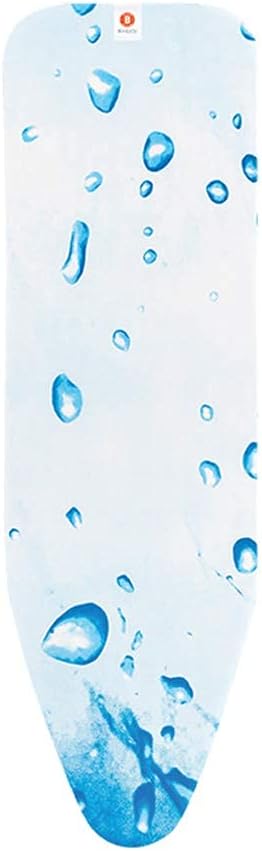
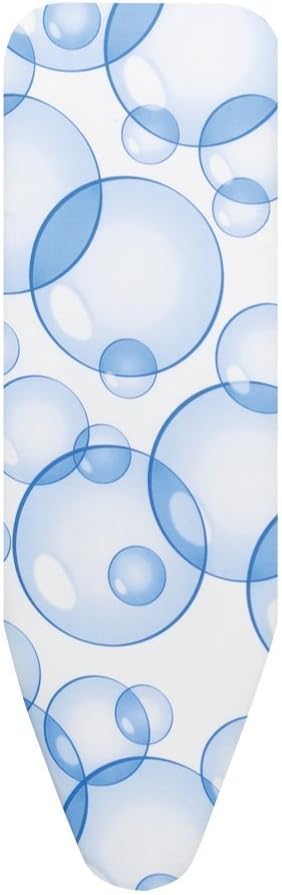
Ironing board cover table of contents Why a good ironing board cover makes the difference Selection criteria: Fit, material and comfort Everyday functions: Steam, heat, padding and hold Care & longevity: How to keep the cover like new FAQ Why a…
We translate dimensions and material into decisions that work in a real household. No empty promises, with an eye for detail.
Ironing board cover
Why a good ironing board cover makes the difference
An ironing board is often underestimated: It stands somewhere in the corner, is quickly unfolded and is just supposed to work. In practice, however, it is not just the iron that decides on smooth results, but above all the surface you work on. A high-quality ironing board cover ensures that heat is distributed evenly, the fabric lies stably and you have to go over the same spot less often. This saves time, protects textiles and makes ironing more pleasant overall. An old, too thin or slipping cover, on the other hand, can tend to "press in" creases, conduct steam poorly and, in the worst case, even leave marks. This is precisely where the right choice starts: Size, material, padding and fastening should suit your ironing board and your habits. If you frequently iron shirts, blouses or delicate fabrics, a smooth, taut surface is particularly important. If you iron large laundry items like bed linen or tablecloths, you benefit from more surface area and a cover that does not give way. Design also plays a role: An appealing pattern can be motivating, but everyday suitability, washability and durability are more important. Anyone who has experienced how a new cover makes an aged ironing board look "like new" again will not want to miss this effect. The following sections provide you with clear guidance on what really matters when it comes to selection, functions, and care – without complicated technical jargon, but with practical criteria that you can apply immediately.
Selection criteria: Fit, material and comfort
The most important step before purchasing is the fit: Measure the ironing surface of your board (length and width at the widest point) and allow some margin for the edges so the cover can be folded over neatly. A cover that is too small can only be fitted under tension and frequently slips; a cover that is too large creates wrinkles and is noticeably annoying when ironing. Also pay attention to the shape: Many boards taper to a point at the front, some are more rounded – a universal cover may fit, but it does not always sit perfectly. Material is primarily about heat resistance, glide, and steam management. Cotton surfaces are pleasantly tactile and suitable for everyday use, while coated variants can reflect heat and speed up ironing. Crucially, the surface should not "stick" when you go over buttons, seams, or zips. At least as important is the padding: A layer that is too thin leads to pressure marks and makes ironing uneven, while good foam or felt padding evens out small irregularities and ensures a smooth result. Comfort is also created through details: A firm fastening that can be retightened is worth its weight in gold – especially if you iron often. If you are unsure which version suits your routine, specialized categories will help you, for example **Ironing board cover with elastic band** for particularly uncomplicated fitting and a firm seat. And if you use a larger ironing surface or iron large laundry items, **Large ironing board cover** is a sensible place to look because the topic of size is the focus here. Ultimately, the following applies: Fit first, then material and padding – only then comes the design. This ensures that the cover not only looks good but also pays off in everyday life.
Everyday functions: Steam, heat, padding and hold
In daily use, it quickly becomes apparent whether a cover really suits you. If you iron with a lot of steam, a surface is required that effectively directs the steam and does not trap moisture. If steam builds up in the cover, the fabric feels clammy and it takes longer until everything is truly smooth and dry. Many modern covers are designed to combine several layers: a durable surface on top, padding underneath and sometimes an additional layer that reflects heat or distributes steam. This can have the effect that you work with less pressure and still get clean results. At the same time, the cover must not slip: As soon as the surface moves while ironing, you are working against the base – this is exhausting and leads to wrinkles more frequently. A stable fit is therefore not an "extra", but a core function. If you regularly use brand-name covers or want to orient yourself towards proven standards, it can be helpful to look specifically for established lines, for example **Vileda ironing board cover**. And if you use a larger ironing surface instead of a classic ironing board, it is worth taking a look at **Ironing table cover**, because different dimensions, fastenings, and material concepts often play a role here. Think about the temperature, too: If you frequently iron linen or cotton, the cover must be able to withstand high heat; for synthetics, a smooth, controlled surface is important so that nothing shines or distorts. Good padding also supports you with difficult areas like seams, collars, or cuffs because it "supports" the fabric without you having to press too hard. In short: A cover is not just "fabric for the board", but a functional system of hold, steam behavior, and comfort – and that is exactly what decides whether ironing is finished quickly or becomes a test of patience.
Care & longevity: How to keep the cover like new
An ironing board cover lasts significantly longer if you treat it like an everyday object with direct contact to heat, steam, and dirt. Typical problems are discoloration due to limescale or starch deposits, shine marks due to excessive temperature and pressure, and odors if moisture cannot escape. A good start is to keep the iron clean and to descale it regularly (depending on the appliance), as residue will otherwise land on the cover first. If you use spray starch or scented sprays, ensure they do not soak directly into the padding – otherwise, stains will form more quickly. Many covers can be wiped down or even washed, but always according to the manufacturer's instructions: Some coatings react sensitively to high washing temperatures or spinning. If washing is possible, a gentle cycle and thorough drying are worthwhile so that no residual moisture remains in the material. Fitting also influences lifespan: If the cover is fitted too loosely, friction and wrinkles develop, which "iron in" over time. Retighten fastenings as soon as you notice the surface moving. For a quick refresh, it is often enough to let the cover dry completely and then re-tension it until it is smooth and taut. It is also practical not to fold up the ironing board while it is damp, but to leave it open for a short time so that steam can escape from the padding. If you view the household as a total system, it also helps to combine ironing and drying sensibly: Well-pre-dried laundry wrinkles less and requires less heat. Appropriately, you will find inspiration at **Clothes airer** and – for outdoors – at **Rotary clothes dryers**. Anyone who dries their laundry with few wrinkles automatically protects the cover because less "power ironing" is necessary. At the latest when the cover has permanent stains, becomes wavy, or the padding has become thin, an exchange is sensible – and usually cheaper and more sustainable than buying a new board. With the right care, the cover remains hygienic, taut, and functional, and you reliably get smooth results over a long time.
Everyday tips: Motivation, order, and small helpers when ironing
So that ironing does not become an annoying marathon task, a small routine that is easy to keep up helps. Start with good preparation: Sort the laundry according to temperature settings and start with delicate textiles so you can turn the iron higher later for cotton or linen without constantly waiting. Also set up a fixed place for accessories – for example, spray bottle, clips, or a small cloth to clean the soleplate – so the process remains fluid. A stable, well-fitting cover supports this routine because you have to readjust less and are not working against slipping. For many, the "fun factor" should not be underestimated: A funny motif can actually motivate if it makes you smile and the ironing board no longer feels like a mere chore object. Anyone who likes that sort of thing will find ideas in the category **Man ironing board cover**. At the same time, it is worth looking at ergonomic details: If the board is set too low, you automatically press harder and strain the cover more because you are applying "weight" into the ironing instead of technique. Set the height so that your shoulders remain relaxed, and work with even, calm movements. For shirts, it helps to iron collars and cuffs first, then sleeves, then front and back – this way you avoid new wrinkles. For large items like bed linen, pulling and smoothing before every ironing stroke is crucial: The smoother the fabric lies, the less heat you need. If you prioritize order, you also reduce piles of laundry: It is better to iron briefly two to three times a week than for half a day once a month. And for a clean process, laundry protection when washing is an underestimated lever: If delicate items do not distort, you iron faster. You can find support here: **Laundry nets**. The combination of sensible preparation, a good cover, and small helpers ensures that ironing remains manageable – and does not cost effort each time anew.
FAQ
1) How do I find the right size for my ironing board cover?
Measure the ironing surface of your board (length and width) and compare the values with the cover's specifications. Plan for the cover to reach around the edges, but not to be so large that it creates wrinkles.
2) What is the benefit of a cover with an elastic band?
An elastic band makes fitting easier and usually ensures a tauter fit. This reduces slipping and prevents wrinkles from being pulled into the work surface.
3) Does an ironing board cover have to be heat-reflective?
Not necessarily. Heat-reflective layers can speed up ironing but are only sensible if you iron frequently or use a lot of steam. More important are fit, padding, and a smooth surface.
4) Can I wash my ironing board cover?
This depends on the model. Check the manufacturer's care instructions.